

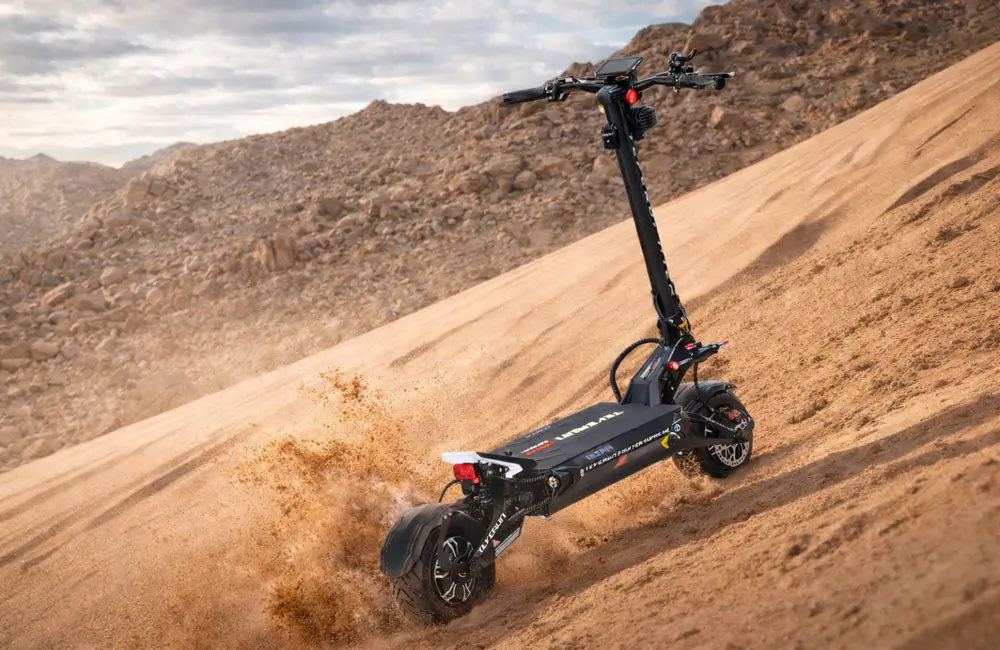
If you’re wondering whether electric scooters can handle sand and bumpy roads, the answer depends on the scooter’s design, power, and terrain-focused features. Standard scooters often struggle on loose sand, gravel, and uneven trails because they lack the traction, suspension, and motor output needed for demanding conditions. However, all terrain electric scooters are specifically engineered to perform better on challenging surfaces, offering enhanced stability, control, and rider comfort.
Features such as larger tires, higher-torque motors, advanced suspension systems, and improved traction technologies make a significant difference when riding on sand or rough terrain. Whether you’re exploring beaches, dirt paths, gravel roads, or mountain trails, choosing the right scooter can dramatically improve your riding experience.
This guide explains how electric scooters perform on sand and rough terrain, what features to look for, how to ride safely, and how to keep your scooter in excellent condition for off-road adventures.
Why Sand and Bumpy Roads Challenge E-Scooters
Sand, gravel, and uneven surfaces create unique challenges for electric scooters. Unlike smooth pavement, these terrains constantly shift beneath the tires, making it more difficult to maintain traction and stability. Soft sand can cause wheels to sink and lose momentum, while loose gravel often reduces grip and increases the risk of sliding. Potholes, ruts, and rocky surfaces can transfer significant impacts through the scooter, affecting both rider comfort and component longevity.
Maintaining control becomes more difficult when tires cannot establish consistent contact with the ground. Riders often need to make continuous adjustments to throttle input and body position to prevent wheel spin and maintain balance. Braking distances can also increase significantly on loose surfaces, requiring extra caution.
One of the biggest challenges is losing traction and getting stuck, particularly on deep sand or steep inclines. Excessive vibration can also make riding uncomfortable and physically demanding, especially on scooters without effective suspension systems. In addition, rough terrain places greater stress on the motor, battery, wheels, and frame, potentially increasing wear while reducing overall riding range.
Tire Size, Motor Power, and Suspension Matter
The most important factors for off-road performance are tire design, motor output, suspension quality, and climbing capability. Larger pneumatic tires generally provide better traction and shock absorption than smaller or harder tires. A powerful motor helps maintain momentum on loose terrain and improves climbing performance on steep trails.
Suspension systems play a critical role in rider comfort and stability. Advanced suspension designs absorb impacts from rocks, roots, and uneven surfaces, helping riders maintain control while reducing fatigue. Traction control systems can further improve performance by minimizing wheel slip on loose surfaces and improving grip during acceleration.
Battery capacity and efficiency also influence off-road performance. Since rough terrain requires more energy than paved roads, riders should expect reduced range compared to manufacturer estimates achieved under ideal riding conditions.
Practical Upgrades and Modifications
Improving an electric scooter’s off-road capability often starts with upgrading the tires. Wider tires with aggressive tread patterns create a larger contact patch and improve grip on loose surfaces. Lower tire pressure can further increase traction by allowing the tire to conform better to uneven terrain, although riders should restore recommended pressure levels when returning to regular road use.
Suspension upgrades can significantly enhance ride quality for scooters that lack built-in shock absorption. Additional front or rear suspension components help reduce impact forces and improve handling on rough trails. Proper adjustment ensures the suspension matches rider weight and terrain conditions.
Protective accessories can also extend the lifespan of an electric scooter used in demanding environments. Reinforcing vulnerable areas, protecting suspension components, and improving water resistance around electrical connections can reduce wear caused by sand, dirt, and moisture exposure.
Riding Techniques for Rough Terrain
Successful off-road riding requires a different approach than riding on smooth pavement. Maintaining consistent momentum is especially important when crossing sand, as sudden acceleration or braking can cause tires to dig into the surface and lose traction. Smooth throttle control helps preserve stability and forward movement.
Body positioning also plays a major role in maintaining balance. Keeping knees slightly bent and lowering the center of gravity allows the rider to absorb impacts more effectively while improving overall control. Relaxed arms help the scooter move naturally beneath the rider without transmitting every bump directly through the body.
Looking ahead and anticipating obstacles is equally important. Identifying rocks, ruts, loose patches, and uneven terrain early allows riders to choose safer lines and avoid abrupt maneuvers that could compromise stability.
Maintenance After Rough Use
Regular maintenance is essential after riding on sand, gravel, or rough trails. Thorough cleaning removes abrasive particles that can accelerate wear on moving parts and bearings. Paying special attention to wheels, suspension components, and hard-to-reach areas helps prevent long-term damage.
Lubricating pivot points, suspension joints, and other moving components helps maintain smooth operation while protecting against corrosion. Excess lubricant should be removed to avoid attracting dirt and debris.
Routine inspections are equally important. Rough terrain can gradually loosen fasteners and place additional stress on structural components. Checking bolts, clamps, wheels, handlebars, and suspension mounts after each off-road ride helps ensure safe operation and prevents minor issues from becoming major repairs.
How to Choose the Right All-Terrain Scooter
Choosing the best scooter for sand and rough terrain starts with evaluating key performance specifications. Models equipped with powerful motors, large wheels, strong climbing capability, and effective suspension systems generally provide the best off-road experience.
Entry-level options can handle light gravel roads and occasional rough surfaces, but riders planning frequent off-road adventures may benefit from premium models designed specifically for challenging terrain. These scooters often feature larger tires, advanced suspension systems, enhanced traction technologies, and stronger construction.
Testing a scooter before purchase can provide valuable insight into its comfort, handling, and performance characteristics. Riders who regularly explore beaches, dirt trails, and rugged paths may find that investing in a purpose-built all-terrain scooter delivers greater long-term value and reliability.
Conclusion
Riding electric scooters on sand and rough trails is entirely possible when the scooter is equipped with the right combination of tires, motor power, suspension, and traction features. Larger pneumatic tires improve grip on loose surfaces, while advanced suspension systems increase comfort and control over uneven terrain. By understanding the challenges of off-road riding, selecting the right equipment, applying proper riding techniques, and following a consistent maintenance routine, riders can confidently enjoy a wide range of terrain and get the most from their all-terrain electric scooter.